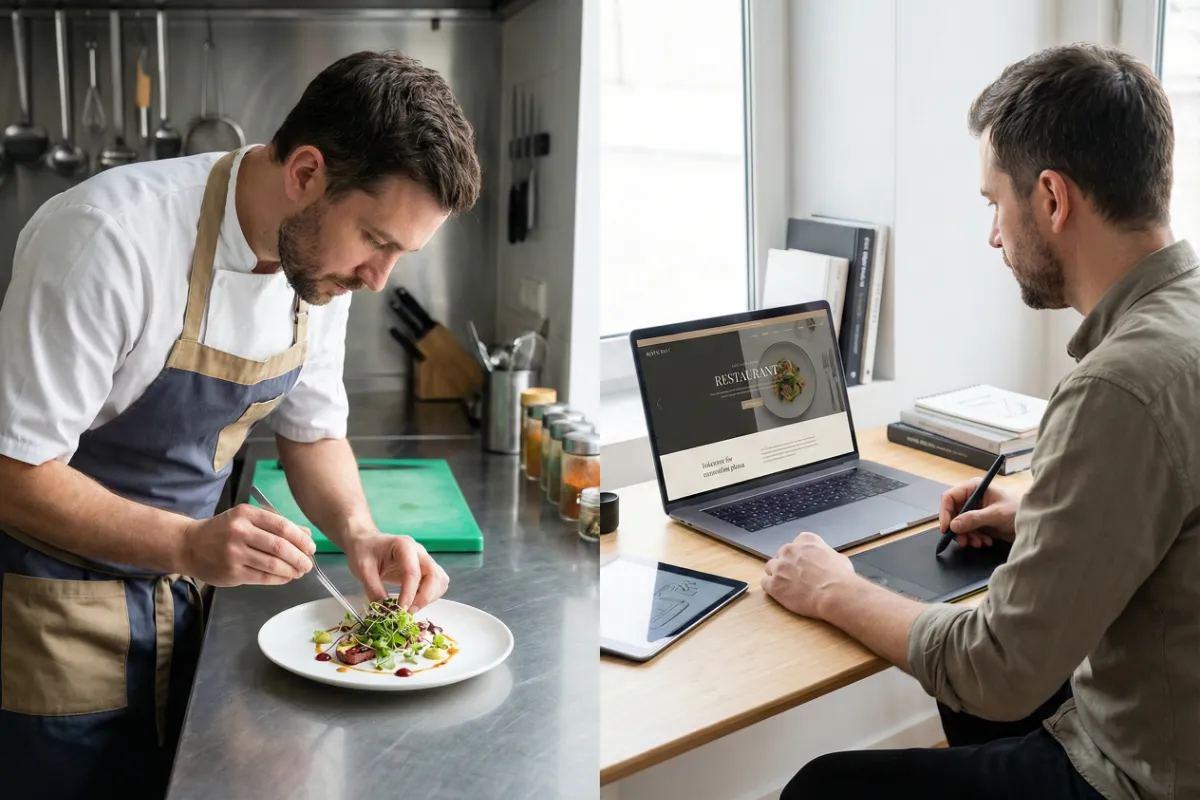
Have you ever thought about swapping your chef’s knife for a design tool? It sounds random, but chefs make surprisingly great web designers. You already get how to plate food with perfect composition and balance colours and work under pressure.
We know this for sure because at Spoon Fed Atlanta, we’ve seen it ourselves. Culinary professionals bring a unique perspective to web design, especially for restaurants and food brands.
In this guide, we’ll cover:
- How food plating mirrors web design principles
- What design skills chefs already have
- How to transition from chef to web designer
- What design specialisations suit former chefs
Read on to learn how your culinary background could launch a creative career.
How Does Food Plating Mirror Web Design Principles?

Both chefs and web designers arrange elements to guide attention, and chefs often do this intuitively through food design principles. They use composition rules like focal points, balance, and negative space to create visual impact. The parallels run deeper than you’d think.
Let’s get into more detail about the similarities.
Visual Hierarchy Guides the Eye
When a chef plates a dish, they follow visual hierarchy by putting the protein at the front and centre. Everything else on the plate plays a supporting role to that main element.
Web designers do the exact same thing: they put the most important content above the fold because that’s where eyes land first. We’re talking about your headline, hero image, or call-to-action elements (similar rules, new canvas).
As you can see, both fields create calculated pathways for where you look next. A chef might drizzle sauce to lead your eye from the protein to the garnish. Meanwhile, web designers use button placement, arrows, or bold colours to pull you from the headline down to the signup form.
White Space Creates Breathing Room
You know that feeling when a plate is crammed with food? It looks messy and a bit amateur, even if everything on it tastes amazing. That’s why professional chefs leave empty space. They intend to use those spaces in the plate to frame the dish so the food looks expensive.
And if you notice properly, a website needs the same breathing room. When you add margins around text and padding between sections, it becomes much easier to scan the content.
To sum up, strategic spacing creates that refined feel on both restaurant plates and website layouts.
Pro tip: Think in threes. A chef plates in odd-number groupings for balance, and designers can use the same rule for icons, modules, or features.
What Design Skills Do Chefs Already Have?
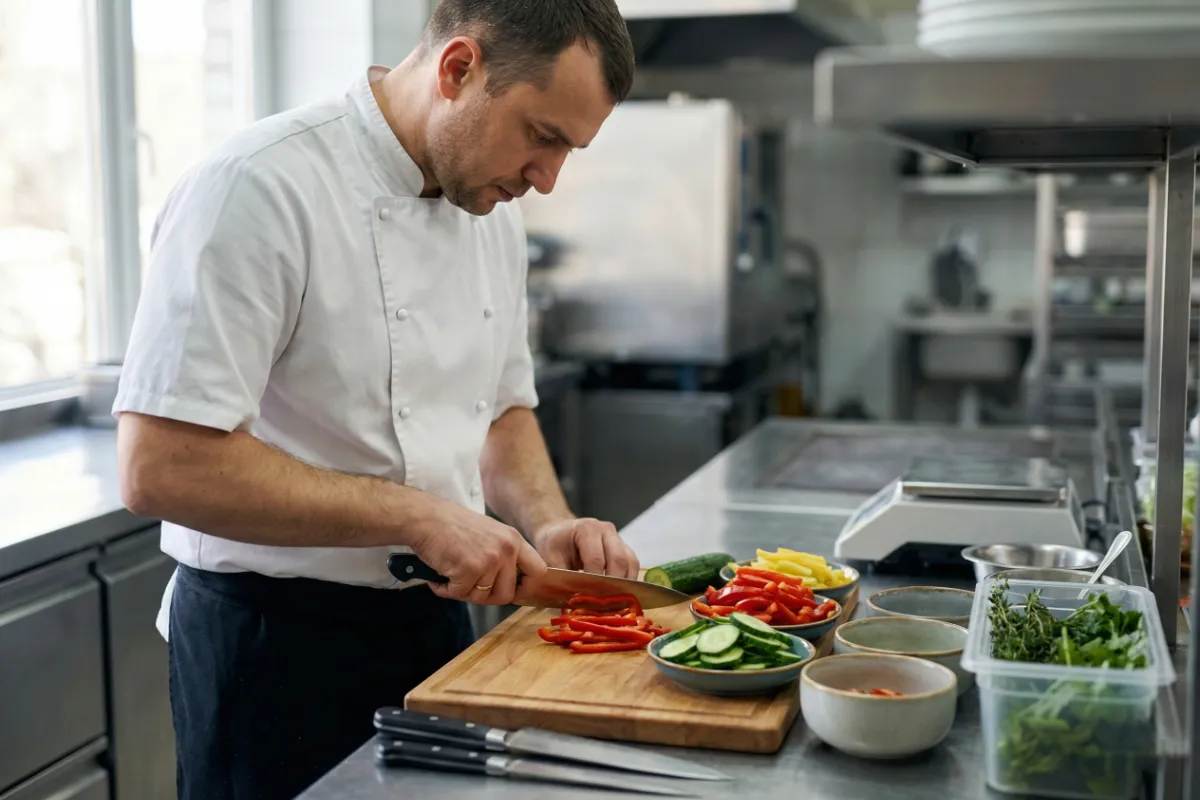
Chefs already have several design skills, like colour pairing, visual contrast, and hierarchical presentation, that translate perfectly into web design.
Here’s how the skills overlap for chefs and web designers:
- Colour Theory and Contrast: Think about the ways chefs pair green herbs with red sauces on a plate. That extra contrast helps dishes look more appetising and photograph-ready. Web designers use these exact same colour rules for buttons and branding elements.
- Typography from Menu Design: Restaurant menus are basically typography masterclasses. Chefs learn hierarchy by making specials stand out from regular items. That same thinking transfers directly to website headers, subheadings, and body text.
- Composition and Balance: Years of plating teach you how to arrange multiple elements without creating confusion. Web designers call this compositional balance, and chefs already know how to distribute visual weight across a canvas (or plate).
- Understanding Target Audiences: You learn what appeals to different diners when you work in fine dining versus casual restaurants. This audience awareness helps you design websites that speak to specific customer segments and their expectations.
When you think deeply, it’s not a career switch. Rather, chefs are just changing canvases.
How Do You Transition From Chef to Web Designer?
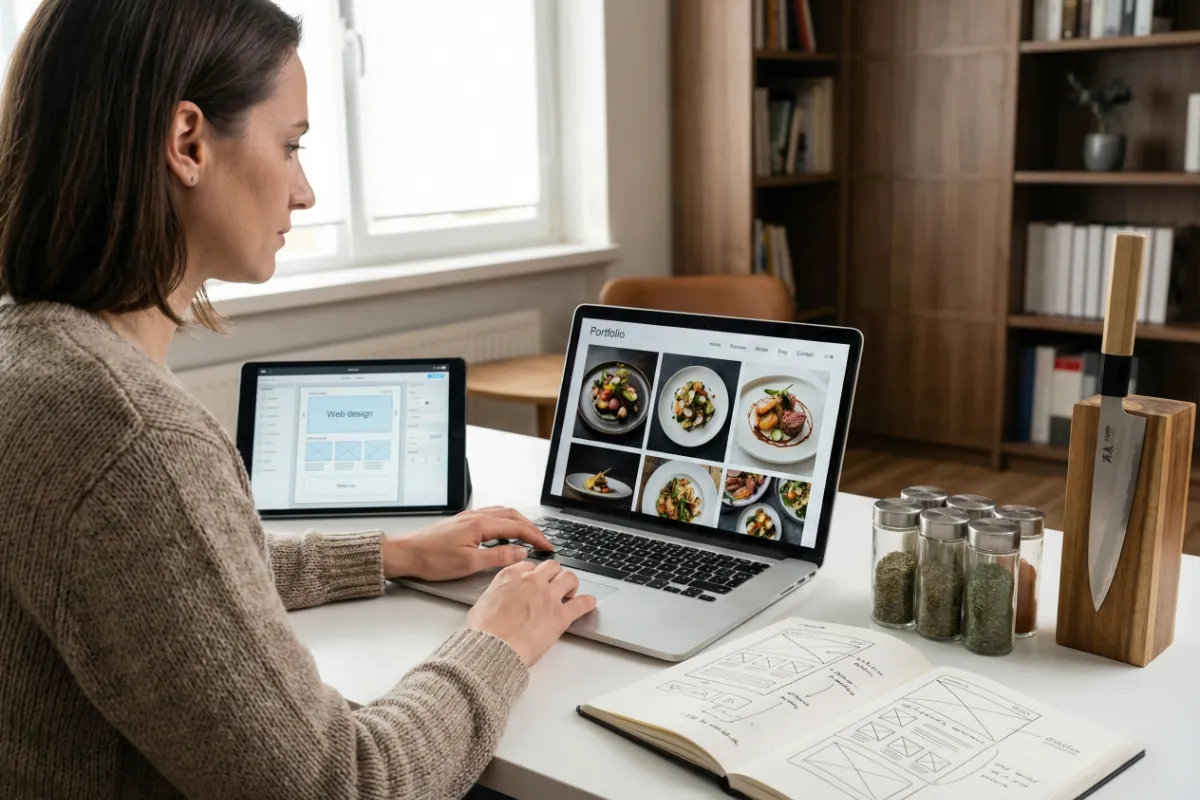
To transition from chef to web designer, you need to build a portfolio website, learn key design tools, and start with food-industry clients.
We’ll explain how you can do all these easily.
Build Your Portfolio Website First
Your own website is your first design project and your proof of concept rolled into one. So, you have to showcase your best dishes with professional food photography. The plating work you’ve already done demonstrates your eye for composition and colour.
Particularly, recipe pages will allow you to practise layouts by organising ingredients, instructions, and photos taken from your own great recipes (your mise en place mindset fits perfectly here).
Also, don’t forget to use your culinary brand as the testing ground. Pick colours that reflect your cooking style, and choose fonts that match your vibe. And when you’ve selected all of these elements, build out pages like About and Contact.
You’re learning by doing… the same way curious cooks experiment to improve their dishes.
Learn Design Platforms and Tools
There are many web platforms available, but which one should you go for?
Well, Webflow, Wix, or WordPress are your best starting points. These platforms let you build professional sites without needing graphic design or writing code right away. Just use drag-and-drop builders to create your page (no staring at code, wondering if you broke something).
As you get comfortable, add Figma for layouts and Adobe tools for graphics. You also have online courses that can teach you UX design fundamentals quickly. Honestly, most of it comes down to practice anyway.
Start With Food Industry Clients
Diners always look for basics like hours, menus, parking info, and reservation links. But many designers miss these details because they’ve never worked a dinner rush, but a chef gets them naturally.
So, we recommend starting with local restaurants that need websites or menu design.
Here’s a tip: Offer discounted rates to chef friends while building your portfolio. This way, you get real projects to show, and they get professional work at a fraction of the usual cost.
What Design Specialisations Suit Former Chefs?
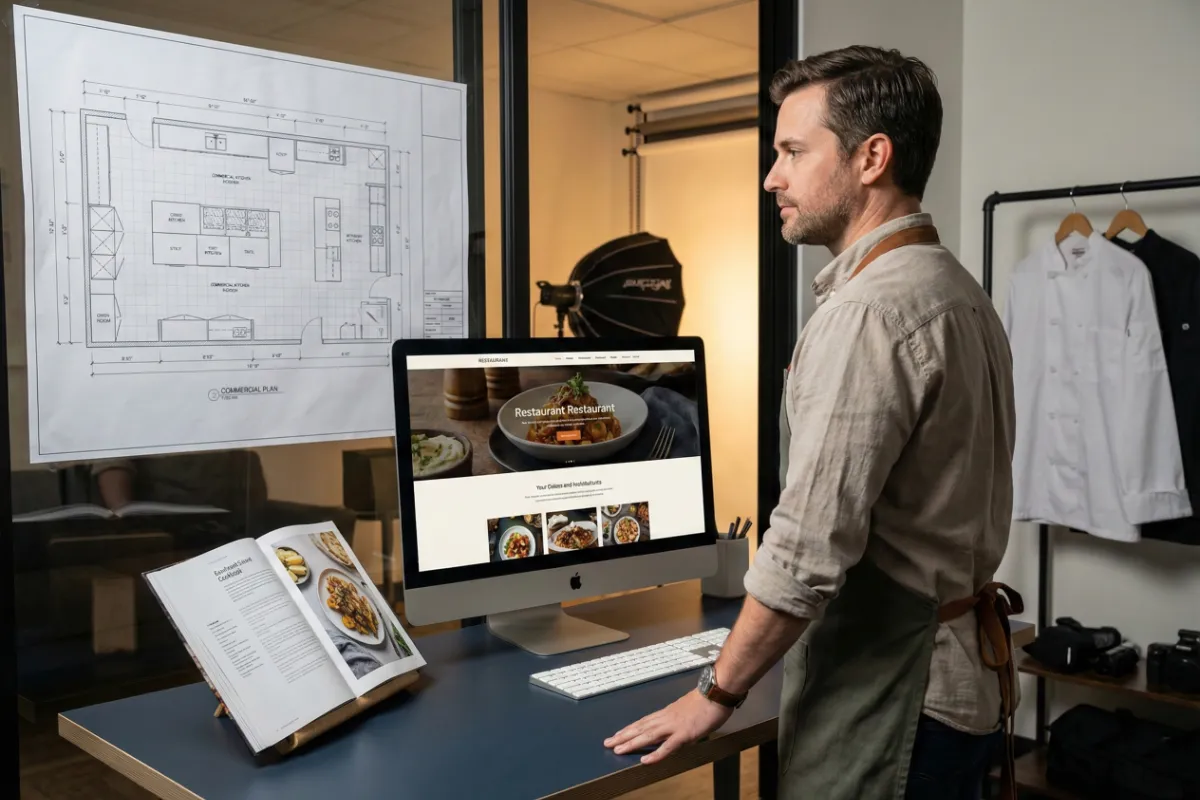
Former chefs do great in restaurant branding, food photography, and menu design. They also know a lot about kitchen space planning because they understand the industry from the inside.
Consider these areas if you want to switch to the design industry:
- Restaurant and Food Brand Websites: You already know what diners search for when choosing where to eat. That’s why creating sites with menus, reservations, and food photography comes naturally to you. You’ve already spent years following restaurant operations and customer expectations.
- Food Photography and Styling: Chefs know how to plate a dish to make it look delicious on camera (a skill that overlaps with product design). Since food brands need product photos for packaging and social media, you can pick this specialisation without difficulty.
- Menu and Cookbook Design: Your cooking experience helps you organise recipes in a way that makes sense. For example, when you design a layout, you know how to balance nice food photos with clear instructions that home cooks need while they’re cooking.
- Kitchen and Dining Space Design: Former chefs understand workflow, equipment placement, and practical layout requirements better than architects. Like, you know why the dish pit can’t be next to plating stations and what happens during a dinner rush. You’ll use this knowledge well if you go for this specialisation.
If you ever feel unqualified, remember: you’ve already been designing experiences your whole career.
Starting Your Design Career Today
The jump from chef to web designer isn’t as wild as it sounds because your food science and kitchen experience give you a deep understanding of how restaurants operate. In reality, your culinary background is your competitive advantage. Use it properly.
If you’re excited to blend your culinary skills with design, reach out to us today. We’ll help you build a portfolio, sharpen your design skills, and create a real plan for your new career.