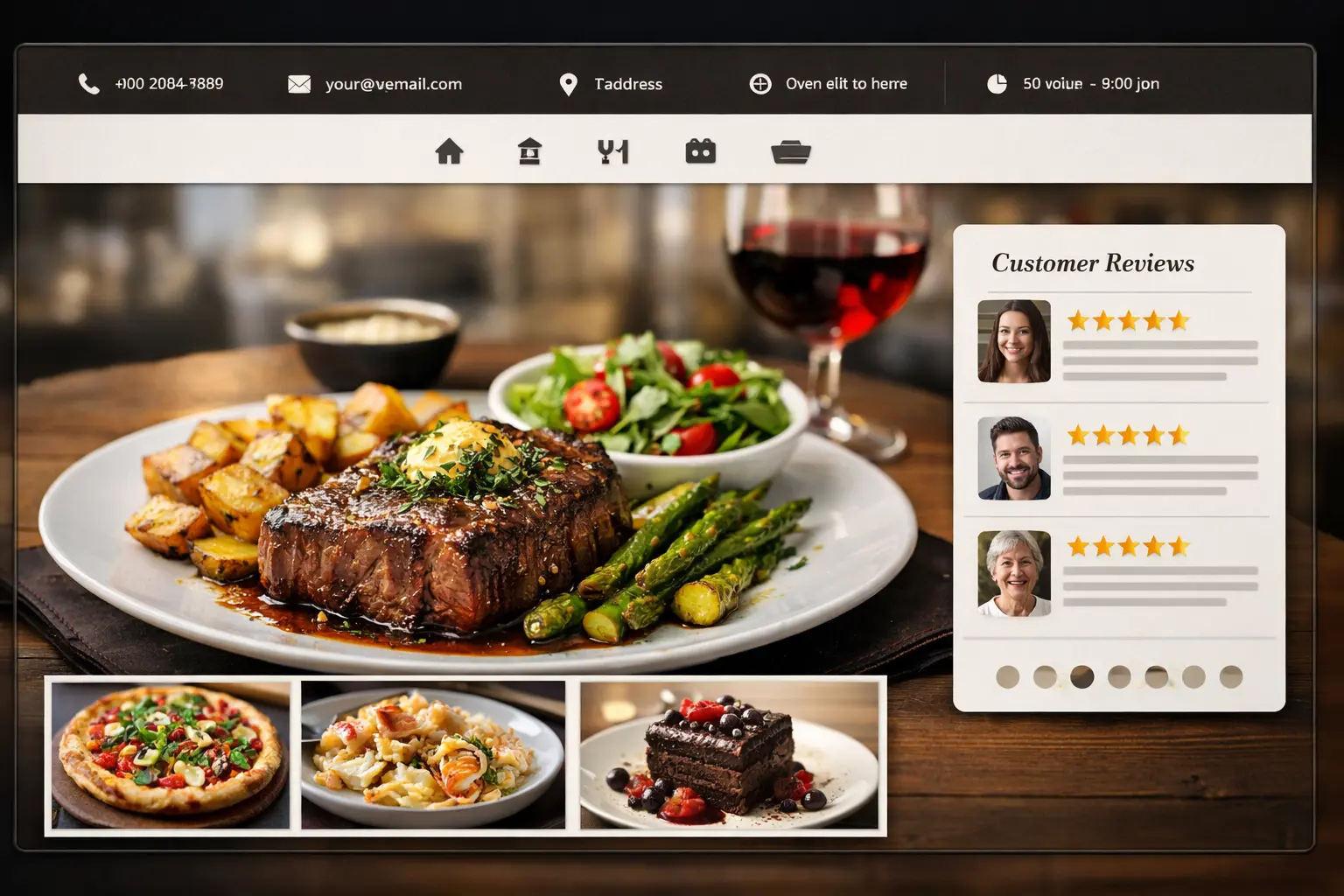
A trustworthy restaurant website shows clear contact information, recent reviews, and professional design within the first three seconds.
Once someone lands on your site, your food brand’s credibility gets judged instantly. And if small details like a missing phone number or blurry photos stand out, visitors bounce straight to a competitor. This happens because people judge credibility based on visual cues before they even read your menu.
Unfortunately, most restaurant owners don’t realise how fast trust signals influence consumer behaviour. So when your landing page loads slowly or buries basic contact details, potential customers assume something’s off and leave.
This article covers which trust elements convert browsers into diners, why they work, and where to start. Ready to see what visitors notice first?
Trust Signals A Restaurant Website Should Have
A restaurant website should have trust signals like clear contact information, professional photography, and simple menus. These visual and functional cues help businesses prove legitimacy to potential customers within seconds. When people scan your site, they look for details that either build confidence or raise red flags.
Here’s what needs to be visible.
Contact Information That Proves You’re Real
Your physical address and phone number need to appear on every page. If customers can’t find this quickly, they’ll assume something’s off and leave (and yes, people do check if your address is real on Google Maps).
Basically, when you display contact details prominently, visitors feel confident reaching you if needed.
Professional Photography That Shows Quality Standards
Sharp, well-lit food photos signal you care about quality. Besides, when images look professional, visitors connect that visual standard to the food they’ll receive.
This connection happens because good design builds trust and loyalty with website visitors through these subtle visual cues. The opposite happens with poor photos, which make people question if your dishes match what they see online.
Menus That Don’t Make People Work
A simple site structure helps visitors find what they need fast. Following a few accessible website best practices makes information easy to locate for everyone.
If someone clicks through confusing pages just to see your hours, they give up and check competitors instead. Because the easier you make things, the longer people will stay engaged.
These three elements build initial trust before anyone reads your menu.
Why Do Google Reviews Build Food Brand Credibility?
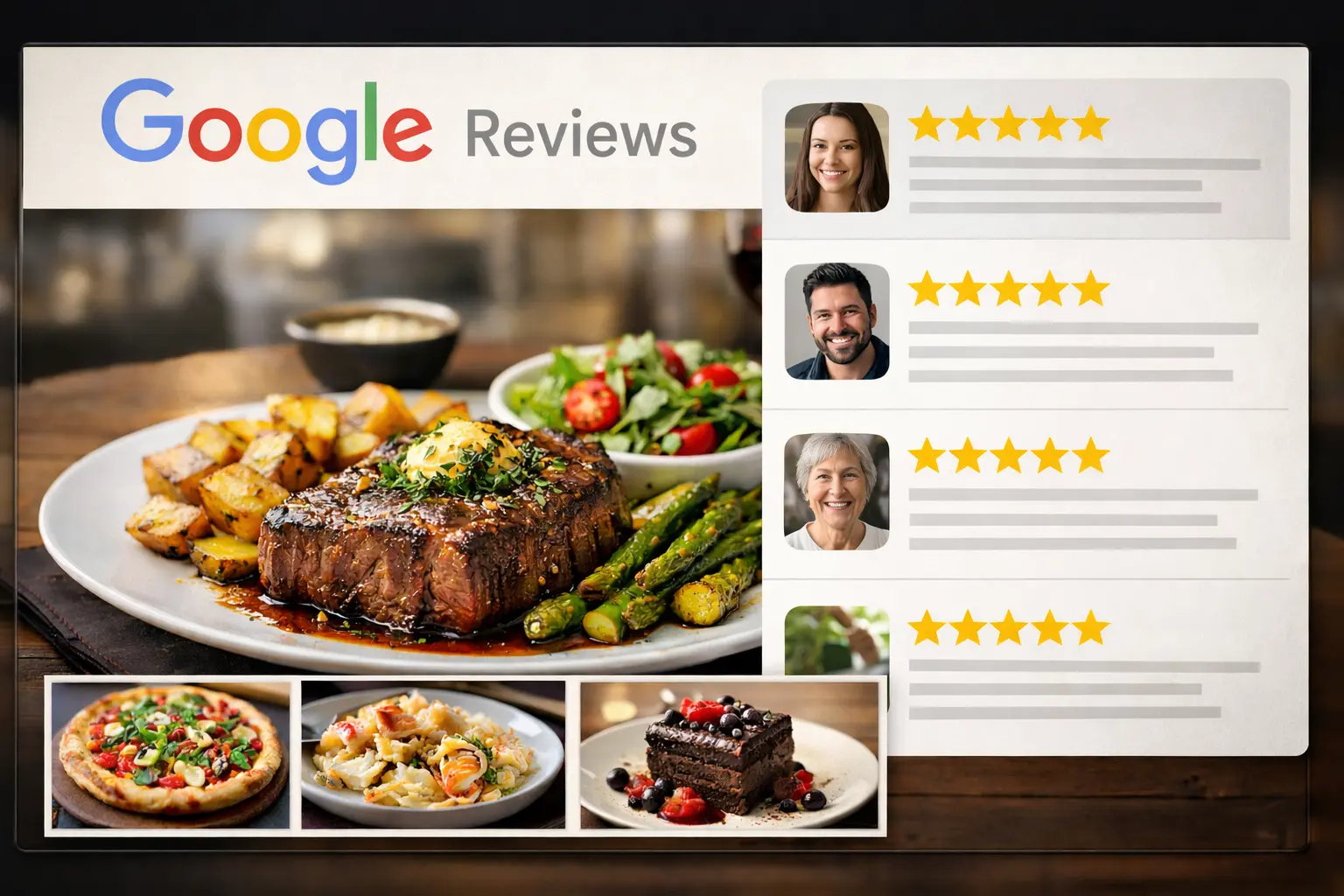
Google reviews provide third-party validation that consumers trust more than marketing copy. What does it mean exactly? Well, reviews act like digital word-of-mouth from real customers.
The timing of those reviews affects trust, too. Recent reviews prove you’re still active right now. And when feedback is three months old, visitors wonder if you’ve closed.
Drawing from our experience with Brisbane restaurant clients, booking rates jump up to 30% after owners start responding consistently. This happens because responses show you care about fixing problems.
How you respond to negative feedback takes that credibility a step further. When someone sees you respond professionally and solve the issue, that proves you take their service seriously. Beyond building trust, reviews also improve your search visibility, which helps more customers find your restaurant online.
But reviews aren’t the only validation that influences customer decisions.
The Impact of Third-Party Validation on Customer Decisions
Third-party validation does the selling for you without sounding like a sales pitch. When an outside authority vouches for your restaurant, potential customers feel more confident choosing you over competitors.
There are three specific types that drive the most conversions.
- Certifications from Health and Food Organisations: Official certifications prove you meet standards that third parties have verified (basically, someone else vouches for you).
- Media Mentions and Industry Awards: A “Best New Restaurant 2024” badge from a food critic or in the local newspaper proves your quality better than anything you say about yourself. That external validation builds credibility in ways that testimonials simply can’t match.
- Partnerships with Well-known Brands: Ever notice how displaying partner logos makes a restaurant feel more legitimate? That’s because trust transfers from established brands to your business, which influences how customers decide where to spend their money.
These offline trust signals work great, but what about e-commerce food sites?
Social Proof Works Best for E-Commerce Food Sites
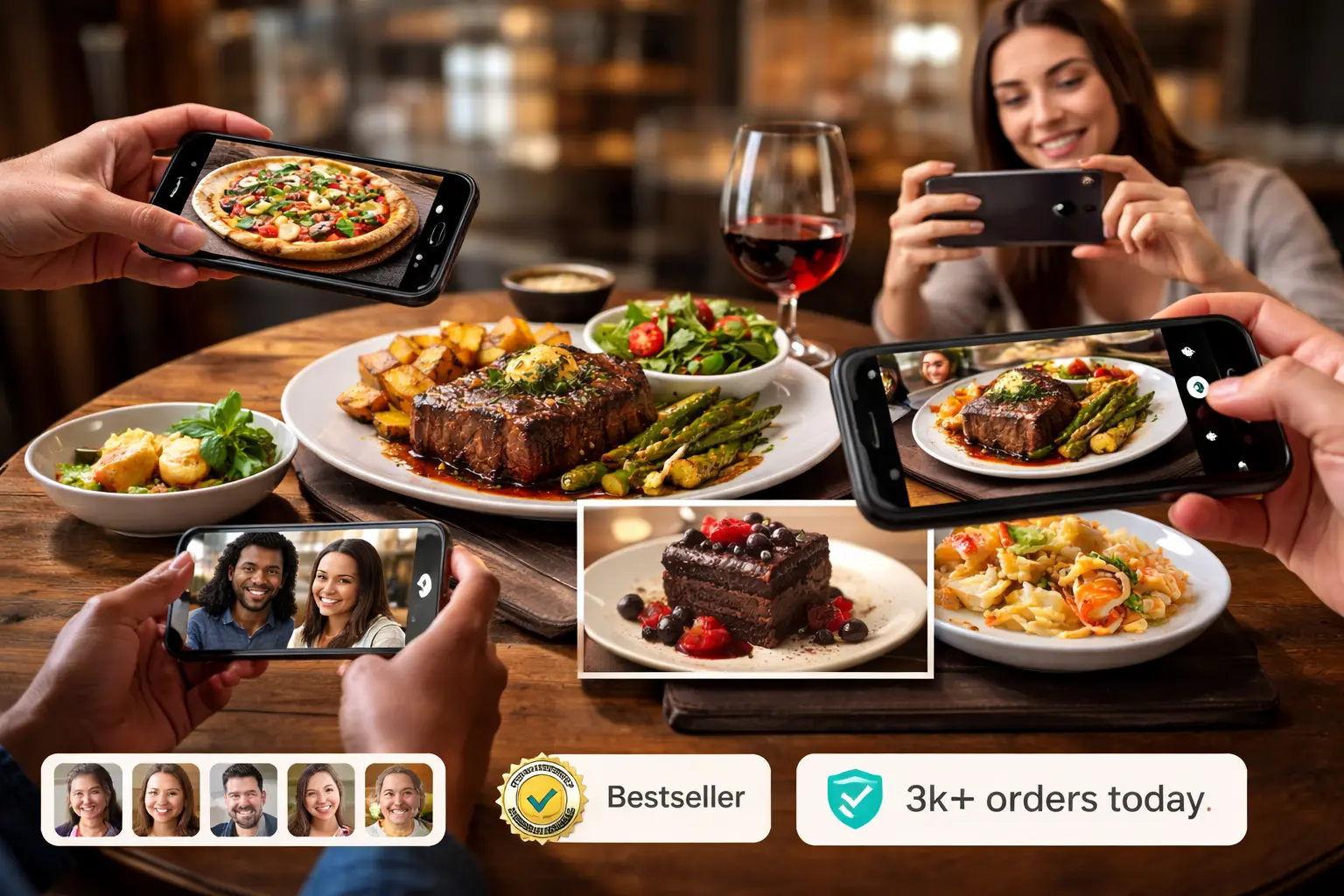
Customer photos, live order counts, and trust badges work best for online food sales. When you’re selling products through e-commerce platforms, people need extra reassurance because they can’t judge quality in person.
Here’s what converts browsers into buyers.
Customer Photos on Product Pages
Believe it or not, a blurry iPhone photo of someone’s takeaway meal can outperform professional shots. Because user-generated images show what customers actually receive when they order, instead of styled photos shot in perfect lighting.
When visitors see real people who have bought and enjoyed your items, they trust that what they’re getting won’t disappoint them.
Live Order Activity That Shows Demand
When someone sees “47 people ordered this today,” the fear of missing out kicks in fast. This works because many buyers trust what other consumers are actively purchasing right now.
Plus, live counters create that urgency by showing real-time activity on your site.
Trust Badges Near Checkout
Security badges reduce cart abandonment right when people are about to buy. The impact is immediate, as these recognised payment logos make visitors feel safer entering credit card details. And that’s how you can directly lift conversion rates on product pages.
Case studies take this proof concept even deeper for specific audiences.
Do Case Studies Convert Restaurant Visitors?
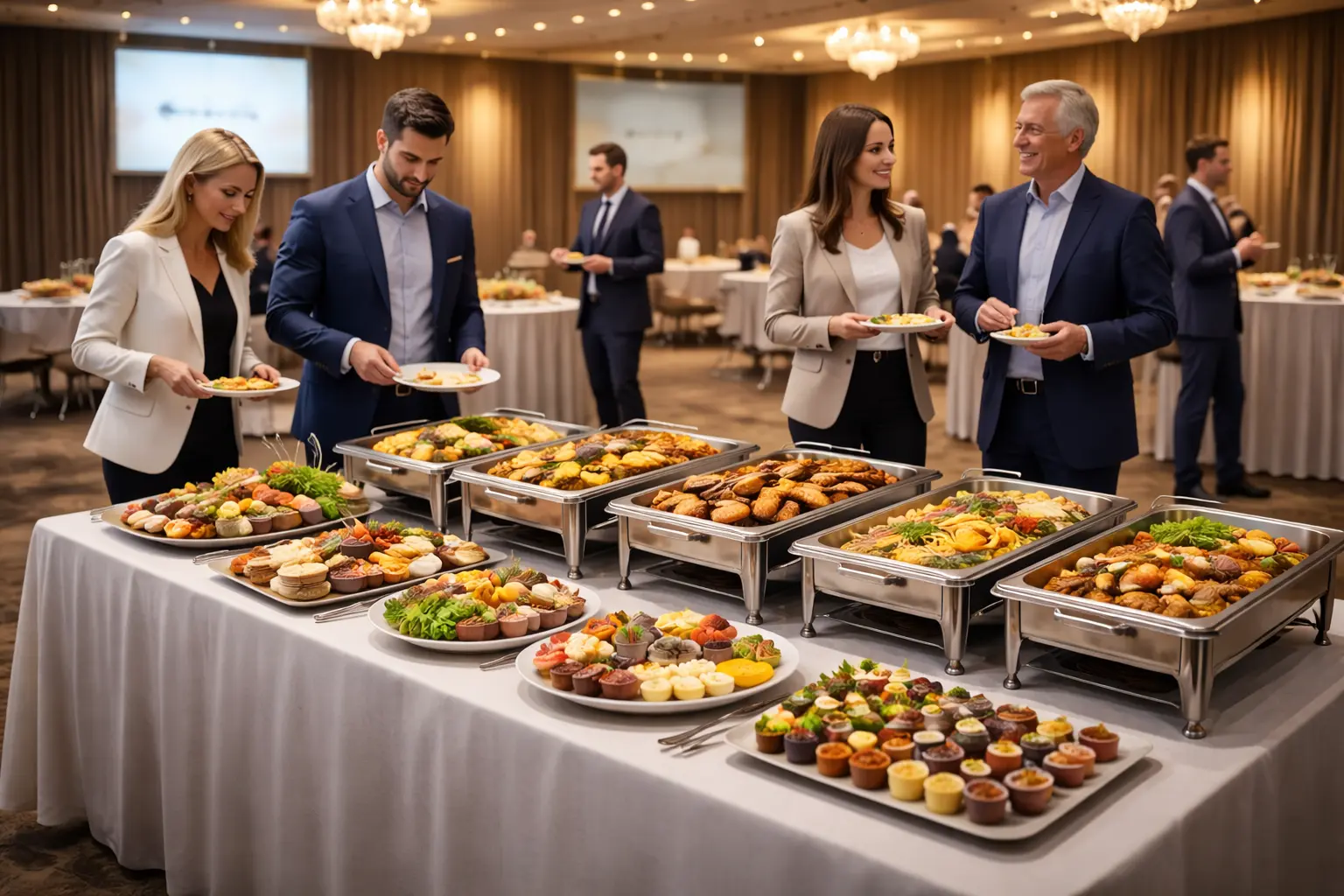
Case studies do convert restaurant visitors, but only when you’re targeting corporate clients or event planners. Through our practical work with catering businesses, we’ve seen case studies convert roughly 44% better for corporate inquiries compared to standard testimonials.
For example, a case study showing how you catered a 150-person lunch with dietary restrictions is more valuable than generic reviews (think 200-person weddings or multi-day corporate retreats). The truth is, detailed success stories help high-value clients justify decisions to their teams or budget committees.
That said, you don’t need to implement all these trust elements immediately.
The Trust Elements Worth Prioritising First
Start with the trust elements that cost nothing and deliver fast results. But you need to focus on Google reviews and response time before expensive design overhauls, then add visible contact information and quick site loading speeds.
We’ve covered the trust signals restaurant websites need: reviews, certifications, customer photos, and case studies. Each element serves a different audience, whether you’re attracting casual diners or corporate clients.
Getting these trust elements right takes planning and experience. That’s where Spoon Fed Atlanta comes in. We build restaurant websites that balance credibility with clean design, and our team will take you through every trust signal you need to convert more visitors into customers.
Let’s get started.